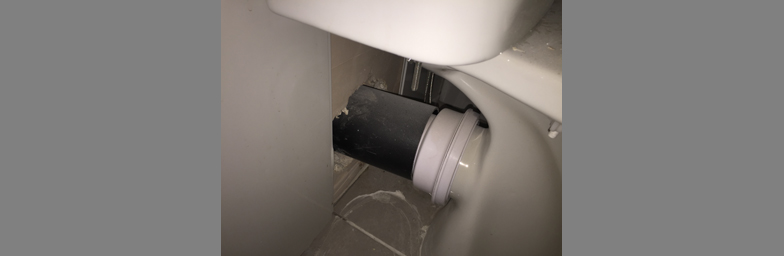
01
Around Service Pipes
Gaps around incoming service pipes are among the most common leakage points found during testing.
Air permeability test calculates the amount of draughts that come into a building when all windows, doors and extractors are closed. The more the draught that enters a building during the winter season the more heating the building may require.
The building regulations require all new buildings to comply with maximum air leakage rate, because, a very leaky building may have substantial energy consumption and CO₂ emissions, high heating bills and occupant discomfort. To demonstrate compliance, an air pressure test is required.
We are qualified and accredited to do air pressure tests. The test certificates we issue are acceptable to all building control officers.
A high precision fan is set up on one of the external doors - either the front, rear or side doors depending on the building.
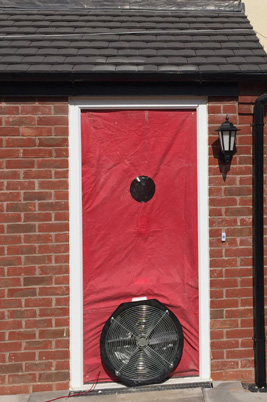
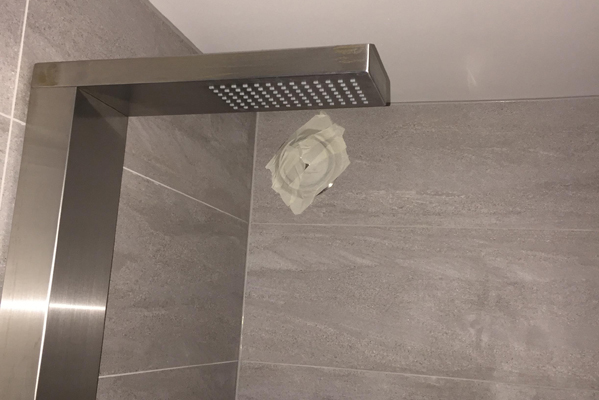
As air permeability tests are focused on un-controlled ventilation, all extracts are sealed using low tack masking tapes i.e. extractors and vents in kitchens, bathrooms, toilets, utility rooms etc.
After calculating the areas of the external walls, roof and floor, and taking some background temperature and pressure readings, the high precision fan is started and used to extract air from the building. This creates a pressure differential which is essentially depressurisation. The pressure differential is measured using the tubes connected to the pressure reading equipment in the image.
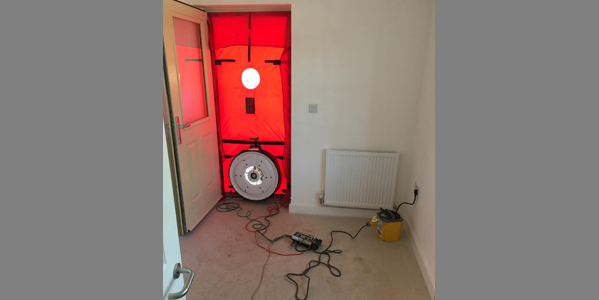
After taking several sets of pressure readings and inputting in the specialist air testing software, the software generates the results. If a pass is achieved, the test results will be lodged with our accreditation body (iATS) and the test certificate made available to you the next working day.
If the building is failing the test, we will identify the leakage areas to enable you make remedial actions. For most minor remedial actions that can be made within a short time, we will wait for them to be done and re-test immediately. For major remedial actions, we will have to come back on a different day to re-test.
To help achieve a pass, please do review some of the main leakage areas in the photos above.
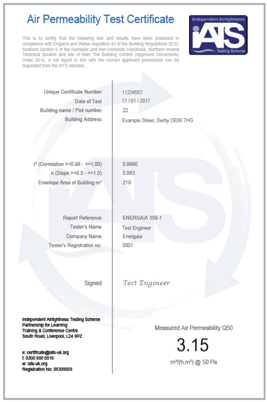
Please scroll through to see some of the main leakage areas that usually lead to fail.
Gaps around incoming service pipes are among the most common leakage points found during testing.
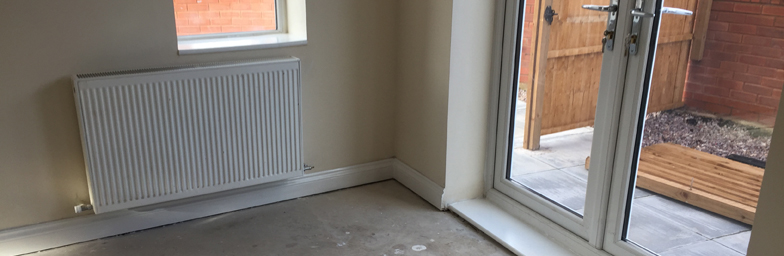
Edge of Skirting Boards and Under Door Frames.
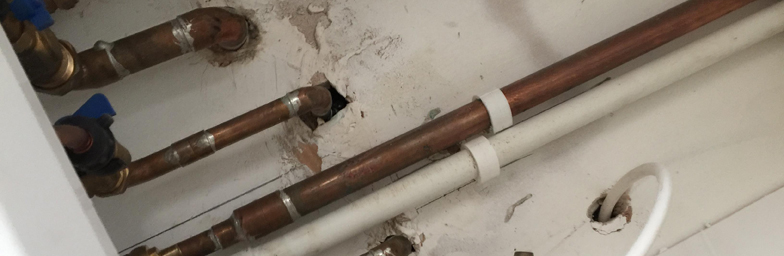
Aroung Gas Pipes
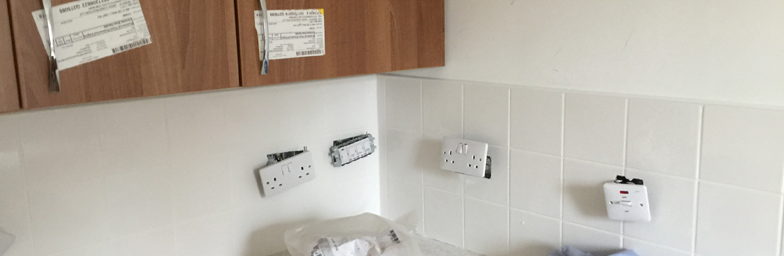
Around electrical sockets and other wall fixtures.
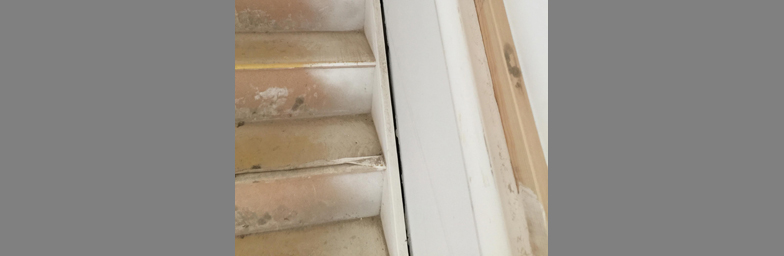
Around and between stair boards
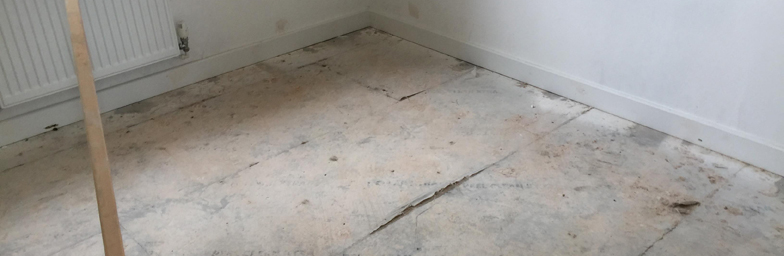
Between floor boards.
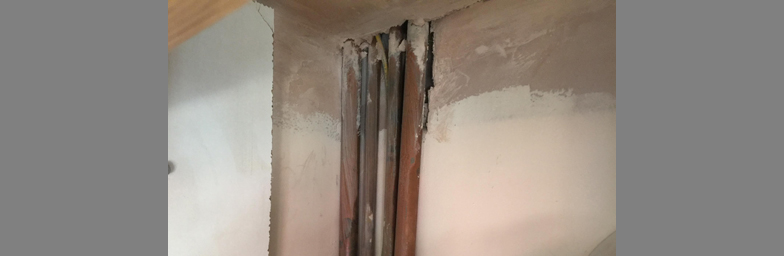
Around pipework penetrations.
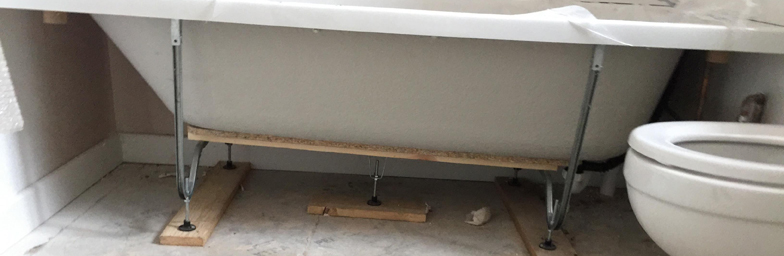
Under the bath - skirtings and around service pipes.
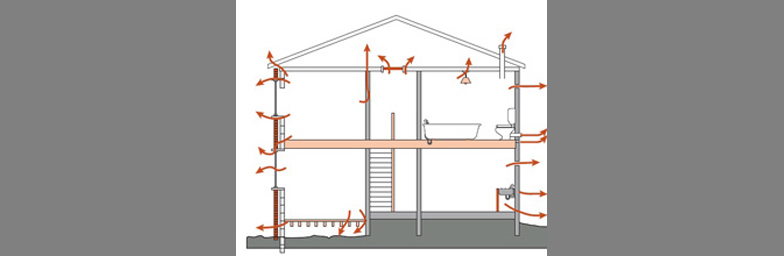
Around downlights and other ceiling fixtures; Around loft hatches and other accessible roof storage or voids; Around the frames of external doors and windows; Junction bewteeen walls/partitions and ceiling/roof.
Call us now to book your test
Get in Touch